
How Jessica Howard's Beaded Halter Construction Actually Works
A beaded halter gown puts most of the garment's weight—beading, bodice lining, and fabric—on a single point at the back of the neck. That concentration of stress is why beaded halter gown construction relies on techniques far more intricate than the finished piece suggests. We engineer every halter to distribute weight evenly, secure beading through multiple anchor points, and keep the neckline stable through hours of wear.
Understanding how these elements work together helps you recognize quality construction and care for the gown correctly once it's in your hands.
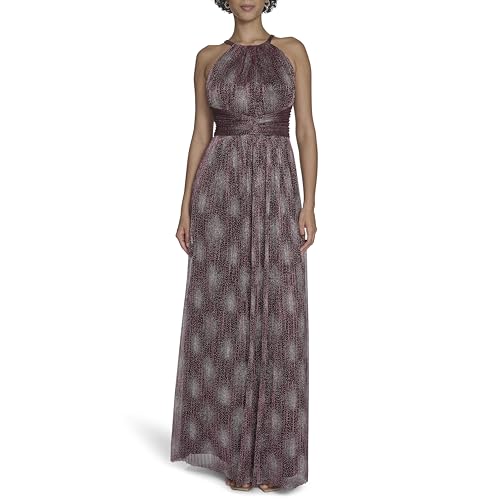
Neckline Reinforcement and Weight Distribution
The halter strap anchors to a reinforced collar stand built into the back neckline. This stand is layered with fusible interfacing and a second pass of stitching to prevent the fabric from stretching or tearing under load.
Beaded sections are backed with a secondary underlining—usually silk organza or grosgrain ribbon—that spreads tension across a wider surface area rather than concentrating it at the seam line. Without this underlining, the weight of the beading would pull downward on the outer fabric alone, distorting the neckline within an hour of wear.
The strap itself is constructed as a tube with an interior chain stitch or petersham ribbon running its full length. This prevents elongation during wear and ensures the halter sits at the same height throughout the evening.
Beading Application and Anchor Points
Each bead or sequin is sewn through both the outer fabric and the underlining mentioned above. For heavily beaded bodices, we add a third layer—a lightweight stabilizer—between the fashion fabric and the lining to prevent the needle holes from weakening the primary material.
Pattern-Specific Beading Maps
Our production team works from beading maps that specify not only bead placement but also thread path and knot density. High-stress areas—the curve of the bust, the side seams, and the transition from bodice to skirt—receive double-knotting and shorter thread spans to prevent cascading bead loss if a single thread breaks.
Beads near the halter strap attachment point are applied in radiating lines rather than concentric circles. This directs any pull from the strap outward across the bodice rather than downward into a single seam, which would create a weak point.
Back Closure Mechanics
Most beaded halter gowns use a center-back zipper rather than a side zipper because the back seam is already reinforced to handle the halter strap. The zipper itself is a semi-exposed style with the tape sewn into the seam allowance and the pull left visible.
A hook-and-eye closure sits above the zipper pull to relieve stress on the zipper slider when the halter strap is tied. Without this secondary closure, the downward pull from the neckline would force the zipper slider to bear weight it wasn’t designed for, leading to separation or tooth damage.
Adjustable Necklines
Some of our halter designs include an adjustable slide or ring at the nape of the neck. The slide is backed with a rubber or silicone gripper strip that prevents slippage once tightened. This allows the wearer to fine-tune the neckline height and tension, which is critical for ensuring the bodice sits flush against the body without gaping.

Lining Construction and Inner Support
The bodice lining is cut from power mesh or a firm silk charmeuse rather than standard lining satin. This firmer hand provides built-in shaping and reduces the need for external boning in many designs.
Where boning is required—typically at the side seams and center front—we use spiral steel rather than rigilene plastic. Spiral steel flexes with the body’s movement but returns to its original shape immediately, preventing the wavy distortion that plastic boning develops after a few hours of wear. Static cling between the lining and outer fabric can sometimes occur with these layered constructions; readers facing that issue may find our guide on managing static in dress linings helpful.
The lining is attached to the outer fabric only at the neckline, armholes, and waist seam. Leaving the bodice and skirt linings free-floating between these anchor points allows each layer to move independently, preventing the bunching and pulling that occurs when every seam is locked together.
Why Construction Details Matter
The engineering behind a beaded halter gown isn’t visible from the outside, but it dictates how the garment performs over hours of movement, sitting, and dancing. Reinforced necklines, multi-layer beading application, and strategic lining choices are what separate a gown that holds its shape all night from one that sags or shifts by the second hour.
Understanding these construction methods helps you evaluate quality when comparing gowns and informs how you handle cleaning and storage. A well-constructed halter gown is built to withstand the stresses of formal wear—but only if those stresses are distributed correctly from the start.
Common Questions About Halter Gown Construction
A fixed loop eliminates the risk of the wearer tying the halter too loosely or too tightly, both of which compromise the fit. The loop is pre-sized to sit at the correct tension for that specific bodice pattern.
This construction also prevents the asymmetry that can occur when one side of a tie is pulled tighter than the other. The loop is sewn through the same reinforced neckline stand described earlier, so it distributes weight identically to a tie closure.
The strap is sewn into the upper edge of the bodice with a French seam, which encloses the raw edges completely. After the French seam is completed, a second row of stitching runs parallel to the first, approximately three millimeters away.
This double-stitched seam is then pressed toward the bodice and topstitched flat. The result is a seam that can withstand significant pulling force without pulling away from the fabric or creating visible stress lines.
Raising the neckline is straightforward—a tailor can shorten the halter strap and re-finish the ends. Lowering the neckline is more complex because it requires relocating the reinforced collar stand and potentially re-mapping the beading in that area.
If the beading extends into the area where the new attachment point would sit, individual beads may need to be removed and re-applied after the alteration is complete. This is labor-intensive and not all tailors are equipped for beadwork, so it’s worth confirming capability before committing to the alteration.
Loose beading usually indicates that the thread securing the beads has stretched or that the knots between bead groups have slipped. This happens most often when the beading was applied without the stabilizer layer mentioned earlier, or when the thread used was too fine for the bead weight.
Shifting beads can also result from inadequate anchor points—if beads are sewn only to the outer fabric and not through to the underlining, they have more freedom to move. Reinforcing loose beads before they fall off entirely prevents the cascading loss that occurs once a single thread breaks.
Yes, significantly. A plain fabric halter can rely on the fabric’s own tensile strength and typically requires only a single line of reinforcement at the back neckline. Beaded halter gown construction demands the multi-layer approach outlined in this guide because the beading adds both weight and puncture points from the needle holes.
The underlining, stabilizer, and double-knotting steps are specific to beaded construction and would be unnecessary—and add unwanted bulk—in a lightweight fabric halter.
We finish the interior side of the halter strap with a soft binding—either silk charmeuse or a cotton-backed satin—that sits against the skin. This binding extends slightly beyond the edges of the strap itself, creating a smooth contact surface with no exposed seam allowances.
For particularly sensitive skin, some wearers add a thin strip of moleskin or medical tape to the back of the neck before putting on the gown. This provides an additional buffer without altering the garment.